Nine Ways to Catify a Rented Flat Without Angering the Landlord (or the Deposit Scheme)

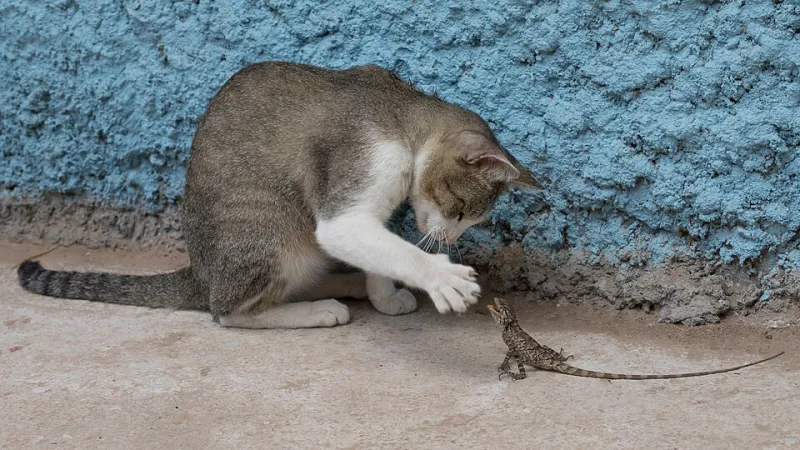
Photo by Photo by Volodymyr Dobrovolskyy on Unsplash on Unsplash
Renting in a British city flat tends to involve two fixed points: a landlord who inspects the place with the enthusiasm of a customs officer, and a cat who views every blank wall as an unexploited opportunity. The good news is that you can give a flat-bound feline proper vertical territory without ever touching a drill bit. The slightly less good news is that about half of what's sold as "no-drill cat furniture" is held together by optimism.
Here's the honest version.
Before you buy anything, do the dull bit
Dig out your tenancy agreement and look for the words "no structural alterations" and "fair wear and tear". The first usually covers screws, brackets and anything that leaves a hole; the second is your friend when you hand the keys back. Most letting agents in 2026 are fine with removable, adhesive-mounted or tension-fitted items — but "fine" is not "agreed in writing". Send an email, keep the reply, and photograph the walls, windowsills and paintwork before installation. It takes ten minutes and has saved more deposits than any cleaning product.
Also worth knowing: many deposit schemes treat small filled holes as reasonable, but cracked plaster around a heavy bracket as damage. Which is why the no-drill approach is quietly the safer financial bet, not just the lazier one.
1. Tension-mounted window perches
The workhorse of the renter's cat setup. A padded platform sits inside the window reveal, held by a spring or twist-lock pole pressing against the top and bottom of the recess. No fixings, no residue, and the cat gets the two things it wants most: height and the outdoor channel.
They work best in recessed windows, not flush ones. Measure the reveal width twice and the depth once, because the platform needs enough purchase to stop the cat using it as a trampoline. Expect £25–£45 for a decent one, and look for a stated weight limit of at least double your cat's fighting weight — 4kg cat, 10kg rating.
Avoid fitting one to a window that opens outward, to anything listed or single-glazed and draughty, or in a room that drops below about 5°C in winter, when the seals stiffen and the whole arrangement becomes a physics experiment.
2. Suction-cup window hammocks
The most seductive option on the shelf, and the most variable in quality. On genuinely smooth, clean glass and glossy tiles they hold beautifully. On textured glass, over grout lines, on cold north-facing windows or on any surface with a film of kitchen grease, they will betray you at 3am with a thud and a wounded look.
If you go this route: clean the surface with warm soapy water rather than spray polish, press the cups on firmly for a full minute, do a two-day weighted test with a bag of rice before the cat goes anywhere near it, and re-seat the cups monthly. Budget £15–£35. Buy two and rotate them; the redundancy is the point.
3. Furniture-mounted steps and ramps
Quietly the cleverest category. Instead of attaching anything to the building, you strap, clamp or hook steps onto furniture you already own — the end of a bookcase, the side of a sideboard, the top of an IKEA Kallax. The flat gains a staircase; the fabric of the flat stays untouched.
Costs run from about £18 for a single fabric step to £60 for a multi-level wooden set. Two rules: only mount onto something heavy enough not to shift, and never onto shelving that holds a lamp, a record player or anything you'd mourn. A 5kg cat landing at speed generates a surprising amount of torque.
4. Removable adhesive shelves
Modern damage-free strips are rated properly these days — 5kg, 7kg, sometimes more — and they come off cleanly if you follow the instructions rather than improvising. They suit small cats stepping between existing furniture at low heights. They do not suit a determined 6kg bruiser launching from a sofa, and they absolutely do not suit warm, freshly painted or slightly textured walls.
Price: £12–£30 per bracket-plus-shelf combo. Style: genuinely decent now, including oak-effect and matte black finishes that don't scream "pet product".
5. Floor-to-ceiling tension poles
A tension pole wedged between floor and ceiling will carry shelves, hammocks or a small tower, and leaves no mark if you use the supplied rubber pads and avoid lath-and-plaster ceilings. Great for the corner of a small living room; less great in a rental with a ceiling rose you'd rather not crush.
6. Leaning ladders and shelf towers
Freestanding, no fixings, repositionable. Excellent for renters who move every 18 months. Just check the footprint — a leaning ladder with a small base and a tall top is a metronome with a cat on it.
7. Window-seat cushions and sill-top beds
Not strictly a perch, but a surprising amount of enrichment for £20. A firm sill cushion with a wipe-clean cover gives a viewing platform without a single fixing. Works on deep Victorian sills and, with a nonslip base, on modern ones.
8. Corner-mounted hammocks on clamps
Clamp-based hammocks that grip a desk or shelf edge are cheap (£15–£25), pack flat and move house easily. Their weakness is thin furniture: a hollow-core shelf will flex, and flexing means wobbling.
9. The wall-mounted option, if you must
If you're staying long enough to justify it, a single small shelf on two screws is stronger and more stable than anything adhesive. Ask first, fill the holes properly on exit, and keep the paint code. It's a bigger commitment for a much better perch.
What looks chic but wobbles
A short, unscientific list. The minimalist plywood shelf held by two suction cups and a hopeful attitude. The macramé hammock that photographs beautifully and swings like a ferry in a gale. The slim bamboo tower that's fine for a kitten and a liability for an adult. The glass-topped side table positioned under a window — not a perch, just a trap for a landing cat. And the £90 designer wall bed whose supplied adhesive pads are, in the kindest possible terms, decorative.
Deposit-day checklist
Keep every box and instruction sheet. Photograph the setup on day one and again on removal day. Clean adhesive residue with warm soapy water and a little isopropyl alcohol, never a scraper. Re-seat suction cups before you move out so nobody finds a mysterious ring on the glass. Then take the cat's new perch to the next flat and repeat, because the cat has by now decided it is load-bearing furniture.