Fresh Air, Feline Boundaries: Eight Home Finds for a Better-Smelling Small Flat in 2026

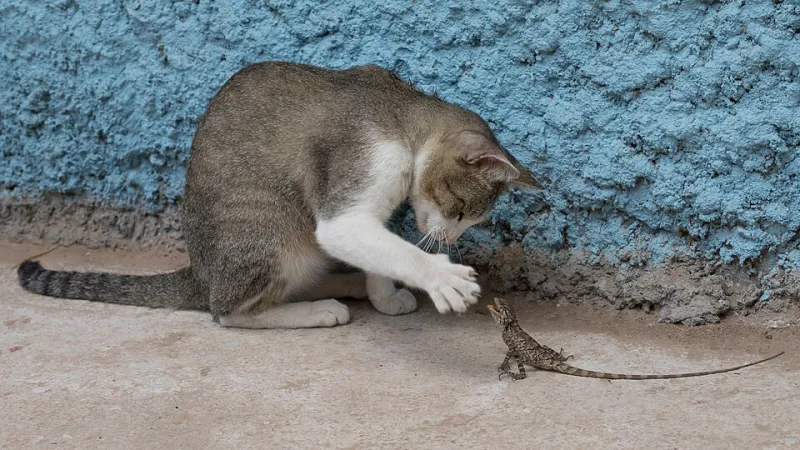
Photo: Paul Anderson, CC BY-SA 2.0, via Wikimedia Commons
At Gato & Co., we love a home that smells like coffee, clean laundry and perhaps a faint trace of cat. We do not love a home that smells like a cattery with a mortgage. In 2026, the small-flat scent conversation has moved on from hiding odours with aggressive sprays and towards the less glamorous but far more effective business of ventilation, washable materials and a litter zone that is allowed to breathe.
The sniff test: a four-point framework
Before you buy anything, do a proper audit. Use four checkpoints: the entry sniff, the sofa sniff, the litter-corner sniff and the guest sniff. Score each from zero to three. Zero is 'I would happily host a vicar'. Three is 'the vicar has made his excuses'. If your total is above seven, you have a project. If it is below four, put the kettle on and stop reading homeware catalogues for sport.
The guest sniff is the honest one. Ask a friend who will actually tell you the truth, not the friend who says 'it just smells like home' while backing towards the door. And keep the rules simple: no essential oil diffusers, no plug-ins, no incense and no ozone generators. Cats have better noses than we do and less patience for our aromatherapy experiments.
The boring truth before the shopping list
No product fixes a dirty litter tray. Scoop at least twice a day, do a full litter change regularly, wash the tray with unscented soap and hot water, and use an unscented litter that your cat actually likes. A perfumed litter is often a perfume plus a problem. The finds below are supporting acts, not replacements for basic hygiene.
1. A stainless-steel litter tray with low entry
Plastic trays scratch, and scratched plastic holds odour in a way that no amount of scrubbing can fully undo. Stainless steel is easier to wash, does not absorb smells and looks less like a plastic washing-up bowl. Choose a low-entry design if your cat is small or elderly, and tuck it into a ventilated cubby rather than a sealed cupboard. A sealed cupboard is just a smell sauna with a door.
2. A compact carbon-filter air purifier
Look for a small-room model with a HEPA filter and a carbon layer, and avoid anything that advertises ozone. Place it near the litter zone, not on top of it, and change the filters when the manual says so rather than when the flat starts to hum. UK electrical retailers and John Lewis-style home departments are full of these in 2026, and a quiet night setting is worth paying for in a studio flat.
3. A washable cotton runner
Litter tracking is a scent issue disguised as a housework issue. A machine-washable cotton runner at the litter-tray exit catches grit before it reaches the rug you cannot wash. Choose a dark pattern, because optimism is not a stain remover. Dunelm and IKEA are reliable for this sort of thing, and a runner is easier to wash than a whole carpet.
4. A waterproof, washable sofa throw
Cats nap, shed and occasionally bring a certain aroma to soft furnishings. A washable throw in a neutral colour protects the sofa without making the room look like a pet clinic. M&S Home, Habitat and similar UK high-street names do good ones. Wash it weekly if your cat is a committed sofa dweller, and do not pretend that a quick shake-out counts as laundry.
5. A pedal bin with a charcoal filter
Scoopings need somewhere to go that is not the kitchen bin, the bathroom bin or a plastic bag on the floor. A small pedal bin with a charcoal filter and a proper lid is unglamorous but transformative. Line it, close it, empty it often. A bin that lives next to the litter tray should be treated like a tiny, sealed crime scene.
6. Bamboo charcoal bags or zeolite pouches
These are unscented odour absorbers, not perfumes. Hang or place them near the litter zone, refresh them in sunlight according to the instructions and replace them when they stop working. Muji-style home stores and pet shops sell versions that do not look like a science fair project. They are not a substitute for scooping, but they are a quiet helping hand.
7. A honeycomb litter mat
A good litter mat traps grit at the exit and rinses clean. Put it directly outside the tray, not three feet away like a decorative afterthought. Shake it out daily and rinse it weekly. If your cat refuses to walk on it, try a softer texture; some cats have strong opinions about underfoot materials, and those opinions are usually correct.
8. A rental-friendly window vent or air circulator
Ventilation is the least fashionable and most effective scent tool in the flat. If you cannot drill, look for a clip-on window vent, a window restrictor that lets in air without letting out the cat, or a small air circulator that keeps the room moving. Do not wedge a window open in a way that turns your urban cat into a rooftop adventurer. Fresh air is good; a feline escape artist is not part of the scent strategy.
Styling the litter zone in a small flat
Do not hide the tray in a sealed cupboard and hope for the best. Leave an air gap, use a breathable screen if you want to disguise it, and keep it away from food bowls and the sofa. A litter tray in the middle of the living room is not a design statement, but neither is a flat that smells like one. A simple screen, a washable runner and a closed bin will do more than a shelf of scented candles.
The 2026 scent audit checklist
Daily: scoop twice, shake the mat, open a window if safe. Weekly: wash the runner, wipe the tray, empty the bin. Monthly: wash the throw, check the air-purifier filter, refresh the charcoal bags. Then do the guest sniff again. If your friend still backs towards the door, go back to the boring truth: the tray is the problem, not the styling.