The Box Always Wins: An Honest Reality Check on Cat Furniture in 2026
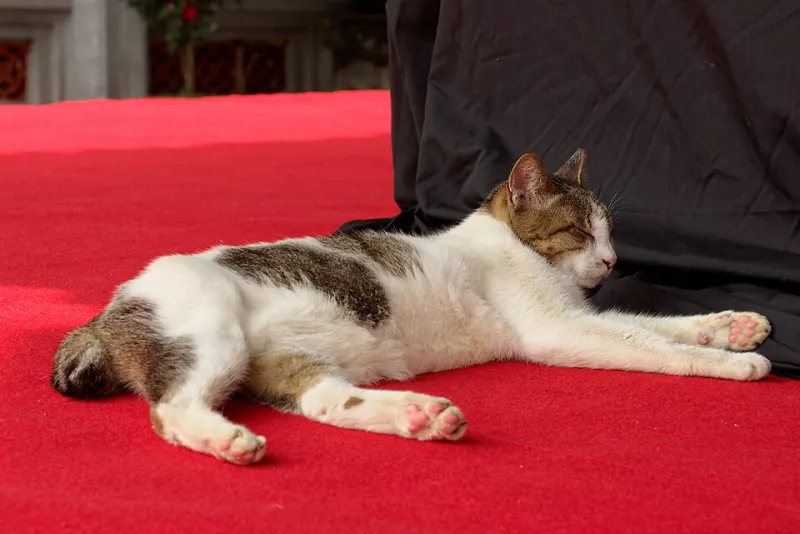
Photo: Jakub Hałun, CC BY 4.0, via Wikimedia Commons
There is a particular kind of defeat that only a cat owner knows. You spend a Saturday assembling a ninety-six-piece cat tree, wrestle it upright in the corner of the living room, stand back and admire your generosity. Forty minutes later the cat is asleep in the cardboard box the tree came in, which you have not yet taken to the recycling. It is the most reliable joke in the animal kingdom, and it has been running for decades.
Except it is not really a joke, and it is not really about the box. Spend long enough talking to behaviourists and to the small British designers making cat kit, and a slightly uncomfortable conclusion emerges: most pet furniture is designed for the human who buys it, photographed for the human who browses it, and priced for the human who feels guilty about living in a flat.
The Box Is Not a Design Failure
Start with why a free cardboard delivery box outperforms a £120 carpeted tower. A box is enclosed on five sides, which offers a cat the thing it craves most in an unfamiliar or busy space: a defended position with one sightline. It is small enough to feel secure, it smells of nothing in particular until the cat rubs its cheeks on it, and it can be chewed, sat on, slept in and abandoned without consequence.
It is also, crucially, warm. Corrugated cardboard insulates surprisingly well, which is why a radiator-adjacent box in a draughty Victorian conversion becomes the most fought-over object in the house. No cat tree has ever beaten that combination, because no cat tree has ever been asked to.
One south London behaviourist put it to us bluntly: cats are not choosing cheap over expensive, they are choosing enclosed over exposed. A wicker basket covered with a folded blanket will beat a designer cave bed nine times out of ten, and it costs nothing if you already own the blanket.
What Cats Are Actually Buying
Strip out the marketing and a cat's priorities in a small flat look roughly like this: height, concealment, a clean sightline to the door, something to scratch that does not wobble, and a warm spot near a human. That is it. Everything else is packaging, sometimes literally.
Where expensive furniture goes wrong is usually one of three ways. It wobbles — a tall tower on a suspended floor in a period conversion is a terrifying thing to jump onto, so the cat jumps once and never again. It smells wrong — glue, dye or a factory finish that reads as unfamiliar for weeks. Or it is in the wrong place — marooned in the middle of a room because that is where it looked best, rather than tucked against a wall with a view of the hallway.
A Bristol-based maker of plywood cat shelves told us that the single most common thing she does with customers is talk them out of a purchase. Nobody wants a shelf above the sofa; they want a shelf above the doorway, because that is where the cat can supervise the flat. It is the sort of advice that costs her money and probably earns her repeat business.
The Space Maths Nobody Does
Here is the awkward part for anyone living in a one-bed with a rental deposit on the line. Whether you spend £12 or £120, the object occupies the same amount of floor. The box wins on cost, but it also wins on the metric that actually matters in a small flat: it can be flattened and put in the recycling when the cat goes off it, which will be in about three weeks.
Permanent cat furniture is a commitment in a way that a scratcher is not. A tower is a piece of furniture you did not choose, cannot move easily and will still be apologising for when you next have people over. Multiply that by a studio flat and you can see why so many of us end up resenting the thing we bought to make our cat happy.
Good-Looking Alternatives That Get Used
None of this means surrendering your home to cardboard and chaos. It means borrowing the cat's priorities and applying them to objects you would have bought anyway.
Steal from your own furniture. A cleared lower shelf, a footstool pulled out from the wall, a mid-century side table with a good gap underneath — all do the same job as a purpose-built hide, and none of them announce themselves as pet equipment. Cats want architecture, not accessories.
Wrap, do not buy. A sturdy delivery box from a local shop, wrapped in a leftover wallpaper offcut or painted with a tester pot, becomes a piece of temporary furniture that looks deliberate and costs under a tenner. Replace it when it goes saggy, guilt-free.
Respect the scratch zone. Cats scratch at entry points and next to favoured sleeping spots. Put a sisal panel or a cardboard wedge there and you have solved the problem people usually solve by buying a tower.
Go second-hand. A wool blanket from a charity shop, a wicker laundry basket, a battered wooden crate turned on its side: all of these outperform purpose-made beds because they smell of the wider world rather than a factory.
Keep it moving. Rotate toys and boxes rather than accumulating them. Novelty does more work than volume, and a flat with five toys out is more interesting than one with twenty.
The Uncomfortable Conclusion
The £120 cat tree is not a con. For a multi-cat household with a spare corner and a cat who likes to climb, it can be genuinely useful, and the good British makers doing birch ply and replaceable parts deserve their money. But if you live in a small flat and your cat has already voted with its paws, the honest answer is that you are buying for yourself, not for them.
The box always wins because the box asks nothing of the cat. It is the cheapest lesson in design we know: start with what the occupant actually does, then make that beautiful. Most of us do it the other way round, and most of us end up with a very expensive tower and a cat asleep in a delivery box beside it.