Paws Off the Port: Designing a Cat-Proof Christmas Spread in a Small Flat
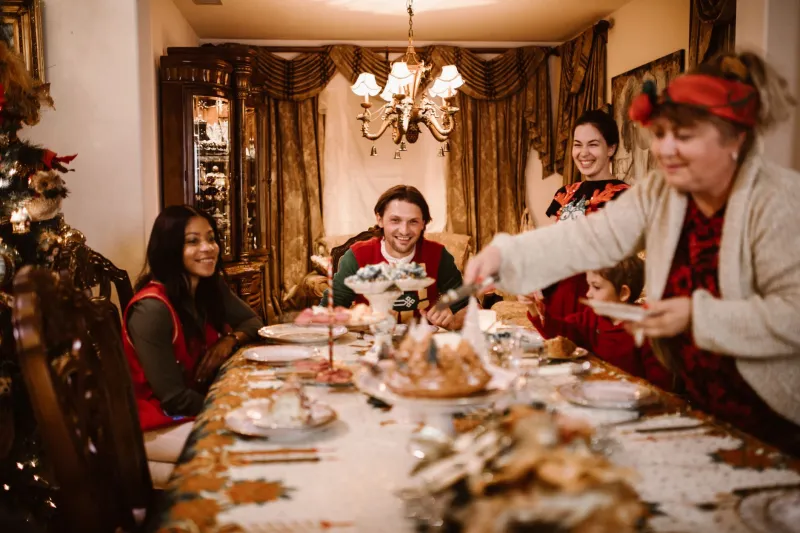
There's a particular kind of chaos that arrives on the 24th of December, and it doesn't come wrapped in a bow. It comes in the form of a cat who has just discovered that the Christmas buffet is at nose height and the mistletoe is, in their considered opinion, a chew toy. Welcome to festive hosting in a small flat, where every surface is a stage and your feline flatmate is the undisputed lead. The goal isn't to cancel Christmas; it's to design a spread that keeps the season bright and the vet on speed dial only for emergencies. So here's your cat-safe Christmas audit, delivered with the humour it deserves.
The Great Christmas Food Audit
Let's start with the obvious: cats are not tiny humans in fur coats. Their bodies process food differently, and some of our festive favourites are genuinely dangerous. Mince pies are the first casualty. Raisins, sultanas, currants and grapes are all off the menu – they can cause kidney damage in cats, and the risk isn't worth the reward. The same goes for Christmas pudding, which also contains suet and often alcohol. Chocolate is another no-go; theobromine is toxic to cats, and while they're less likely to raid a selection box than a dog, a curious lick of a chocolate wrapper is still a vet visit.
Onions, garlic, leeks and chives are all in the allium family and can damage red blood cells. That means your sage and onion stuffing, your gravy, and your pigs in blankets (if they've been near the onion) are not cat food. Alcohol is a hard no – even a lap of port can be dangerous – and xylitol, found in some sugar-free sweets and chewing gum, is highly toxic. So what can you put out that won't send your cat to the emergency clinic?
Supermarket Swaps That Won't Ruin the Party
You don't need to serve a bland buffet. Just swap the risky bits for things that are safe for humans and cats alike. Instead of mince pies, offer a platter of cat-safe treats like plain cooked chicken (no seasoning), or a bowl of cat-friendly vegetables such as steamed carrots and peas. For the humans, keep the mince pies but store them in a sealed tin on a high shelf, and only bring them out when you're actively supervising. Chocolate can be replaced with a cheese board, but be careful: cheese is fine in small amounts, but too much dairy can upset a cat's stomach. Keep the cheese out of reach too, just in case.
For the festive drinks, skip the mulled wine near the floor and opt for a jug of water with cranberries and orange slices – it looks festive and is cat-safe. If you're serving alcohol, keep it in a closed cupboard or on a high surface. And remember, cats are climbers. A 'high surface' in a small flat might be the top of the fridge, which is also where you keep the biscuits. Choose your battles.
The Greenery Gauntlet
Christmas plants are a minefield. Mistletoe is toxic, and while a single berry might not kill a cat, it can cause gastrointestinal upset and worse. Holly and ivy are also dangerous, and poinsettia, while often overstated in its toxicity, can still cause irritation and vomiting. Lilies are the worst – even a small amount of pollen can cause kidney failure in cats. So what can you use to deck the halls?
Safe Alternatives for a Cat-Friendly Christmas
Go for artificial greenery, or choose cat-safe plants like spider plants, Boston ferns, or Christmas cacti (which are non-toxic). If you want the real thing, consider a small rosemary bush or a pot of cat grass – it's festive, green, and your cat can nibble it without a trip to the vet. Just be aware that cat grass can be a laxative, so don't let them eat the whole pot in one sitting. For the table, use dried orange slices, cinnamon sticks, and bay leaves – they look lovely and are generally safe, though you should still keep them out of reach if your cat is a determined chewer.
The Layout Lowdown: Designing a Cat-Proof Festive Table
In a small flat, the dining table is often the only surface big enough for a buffet. But it's also a cat magnet. The trick is to create zones: a high, cat-free zone for the risky foods, and a lower, cat-safe zone for things they can investigate without harm. Use a tiered cake stand for mince pies and chocolates, and place it at the back of the table, ideally against a wall. For the cat-safe nibbles, use a low tray that's easy to supervise.
Furniture and Flow
If your cat is a jumper, consider a festive table runner that's secured with clips – or skip the runner altogether and use a wipe-clean tablecloth. Avoid dangling decorations like tinsel near the table; it's too tempting for a swipe. Instead, hang decorations high or use window decals. If you're hosting, keep the buffet on a sideboard rather than the main table where people are eating. That way, the cat has less opportunity to leap onto a plate of turkey.
And finally, give your cat a safe space to retreat to. A bedroom with a comfy bed, water, and a litter tray will let them escape the noise and the temptation. You can even set up a festive corner with a cat tree and a few toys. That way, when the doorbell rings and the guests arrive, your cat has somewhere to go that isn't the middle of the cheese board.
Christmas with a cat in a small flat is a balancing act, but it's doable. Audit the food, swap the risky bits, choose safe greenery, and design your layout with feline curiosity in mind. Then pour yourself a glass of something nice (and keep it out of reach). Your cat will thank you – probably by ignoring you completely and sitting on the wrapping paper. Merry Christmas, and may your vet be bored.