The Whisker Roundabout: Redesigning a Small Rented Flat Around Your Cat’s Actual Commute

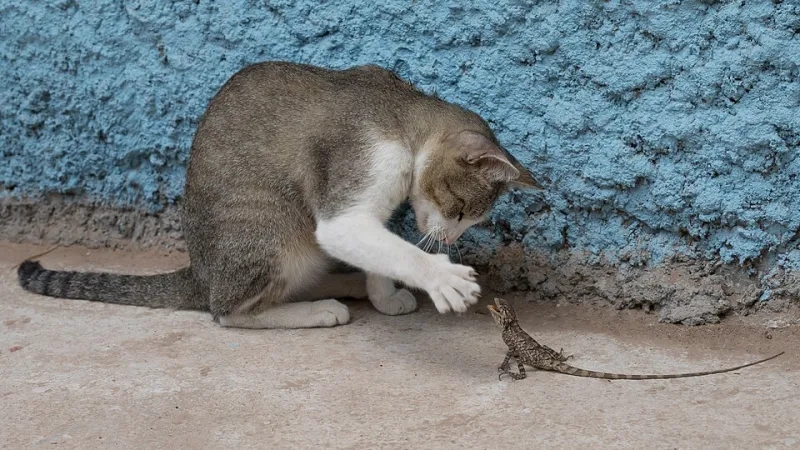
Photo: IPPA photographer, CC BY 4.0, via Wikimedia Commons
Every small flat has two floor plans. There is the one you drew when the letting agent handed over the keys: sofa here, telly there, a hopeful plant in the corner. And there is the one your cat has been running since day one, which ignores all of it and goes bed → bowl → windowsill → litter tray → your laptop keyboard at precisely the wrong moment.
If you live with a feline tyrant in a compact rented flat, it pays to think like a traffic planner rather than a decorator. Not because cats obey signage — they do not — but because a few small layout changes can turn a flat full of standoffs into something closer to a functioning one-way system. Here is how to map the commute, spot the chokepoints and rearrange the furniture without upsetting the deposit scheme.
Start with a traffic audit, not a shopping list
Before you buy another cat bed that will be ignored, spend 48 hours watching how your cat actually moves. Urban planners call these desire lines: the routes people take when nobody has built a pavement. Cats have them too, except theirs usually involve squeezing behind the telly and using a stack of unopened post as a speed bump.
Make a note of the big four: where your cat sleeps, where they eat, where they drink and where they conduct their private business. Then trace the paths between them. You will probably find one main artery — often the hallway, because it is the only bit of floor not currently occupied by a laundry airer — and several smaller rat runs behind furniture.
This audit is not about judging your cat. It is about noticing that the litter tray is currently placed on the far side of a door that gets closed at night, or that the water bowl sits beside the washing machine during spin cycle. Small flats make these things obvious once you look.
The hallway is your M25 at 8am
In a one-bedroom flat, the hallway does more work than any other strip of floor. It is the approach to the front door, the route to the bathroom, the place where shoes go to die and, for your cat, the main connecting corridor between everything that matters.
Keep it clear. Not minimalist-showroom clear — just clear enough that a cat can move through without having to climb over a rucksack, a hoover and the bag you keep meaning to take to the charity shop. A cat can fit through a gap the width of a whisker, but they will not thank you for making them do it while a delivery box blocks the exit.
If your hallway is narrow, create passing places. A slim shoe rack against one wall, a shallow console table or a couple of hooks for coats can free up floor space without eating the whole corridor. Rugs can also help define a route and stop your cat from sliding into the skirting board during a zoomie, though a cheap rug that bunches up is its own kind of traffic hazard.
Bottlenecks, chokepoints and the doorway standoff
The classic small-flat bottleneck is the doorway. Cats like to sit in them, sprawl across them or use them as a launchpad for ambushes. You like to walk through them carrying a hot mug. This is not a sustainable arrangement.
Look for places where furniture narrows a route to a squeeze. A sofa pushed too close to a bookcase, a dining chair left at an angle, a laundry basket parked in the one bit of floor that connects the kitchen to the living room. Move these first. You do not need a complete redesign; sometimes 10cm in the right place is the difference between a clear run and a daily standoff.
Doorways also need escape routes. A cat who feels cornered in a narrow hall will not politely wait for you to pass. They will take the vertical option, usually via your curtains. Keeping the route behind them open — even just a gap beside a chair — makes them far less likely to treat your soft furnishings as a fire exit.
Vertical shortcuts are a renter’s best friend
Cats think in three dimensions. You think in “where can I put the sofa without blocking the radiator”. The compromise is verticality: a tall bookcase, a sturdy cat tree by the window, an ottoman that doubles as a stepping stone to the sill. These give your cat a shortcut over the top of the flat rather than through the middle of your morning.
Renter-safe is the key phrase here. Do not start drilling shelves into walls unless your tenancy agreement says you can and you know what you are doing. A freestanding bookcase, properly anti-tipped according to the manufacturer’s instructions, is a better bet than a no-drill shelf held up by hope. Command hooks are brilliant for fairy lights and lightweight pictures; they are not a hammock support system for a cat with ambitions.
If you do use wall-mounted products, check the weight limits, read the instructions and keep the receipt. “It looked fine on the internet” is not a defence at check-out.
Keep the plumbing separate
Food, water and litter have their own traffic logic. Most cats prefer not to eat next to the place they toilet, and many prefer water away from food. In a small flat this can feel like a game of Tetris, but it is worth getting right.
Put the litter tray somewhere quiet but not a dead end. A bathroom or a hallway alcove can work; a cupboard that gets locked at night does not. Avoid placing it next to the washing machine, the boiler or anything that makes sudden noises. A litter mat is not glamorous, but it catches more grit than your socks will.
Feed in a spot where your cat can eat without being startled by the front door, and keep the water bowl away from both the food and the litter. If your cat drinks from the tap, congratulations: you have a second water feature and no further questions.
Furniture Tetris with the deposit in mind
When you move things, move them properly. Furniture sliders and felt pads are cheap, effective and far better than dragging a sofa across a laminate floor while making a face like a removal man. Take photos before and after. If your deposit is protected by a scheme such as the DPS, TDS or mydeposits, you want evidence that the flat was not held together with adhesive strips and optimism.
Avoid anything that strips paint, leaves residue or puts holes in walls without permission. Keep fire exits clear. Do not block radiators, vents or the bit of floor where the boiler engineer needs to stand. And if you are rearranging alone, do not attempt to move a wardrobe that is taller than you are. That is not a traffic plan; that is an insurance claim.
Test, observe, revise
A floor plan is only a hypothesis. After you rearrange, watch for a week. Does your cat use the new route, or do they still launch themselves over the armchair? Are they avoiding the litter tray? Hiding more? Meowing at a closed door that used to be open?
Be prepared to move things back. The cat is the planning inspector, and their report is final. The aim is not a perfect show-home layout. It is a flat where your cat can move, rest, eat and plot without treating every doorway as a border dispute. Get that right and you may even get your hallway back — at least until the next delivery box arrives.